The Useful Idiot in the Corner: Notes from the Wrong End of the Rehearsal Room

Photo: Pompeo Massani, Public domain, via Wikimedia Commons
There is a particular sound a rehearsal room makes when you are the oldest person in it. It is not the drummer counting in, or the guitarist insisting the amp has one more clean headroom in it. It is the tiny pause before someone asks you a question, as if you might be hard of hearing, or about to launch into a story about 1978. I have learned to enjoy that pause. It is useful thinking time.
I spent a recent Thursday in a draughty church hall with four musicians younger than my favourite guitar lead. The heating clicked on and off with the enthusiasm of a reluctant applause. There was a tea urn, a laminated fire notice, and a bass player who kept saying “let’s just try it” in a tone that suggested we had already tried it. We had not. That is the point of being there.
The gear that refuses to die
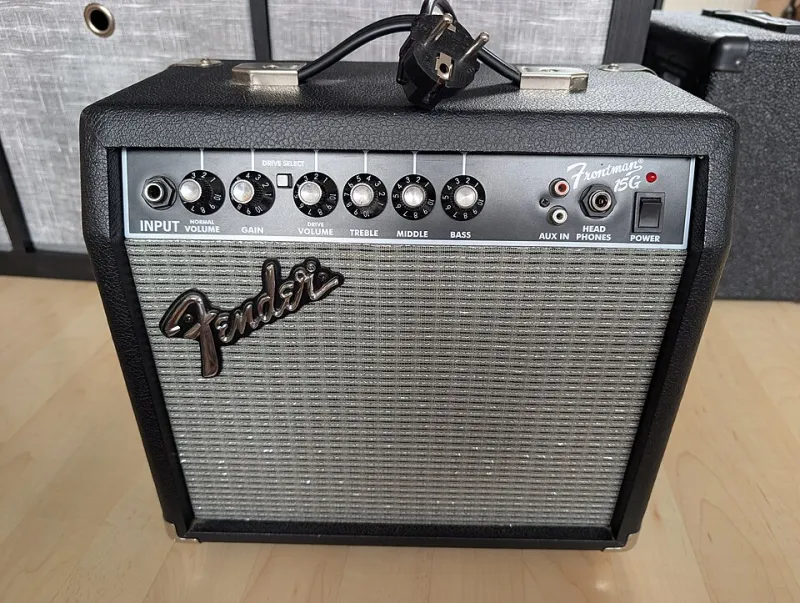
My amp is older than most of the band. It is not a museum piece; it is a working object with a scratchy input and a rattle that appears only on the low G. I have taken it to be serviced more times than I have taken myself. The repair man knows it by name. He once told me, with genuine affection, “This thing will outlast both of us, but it won’t get any lighter.”
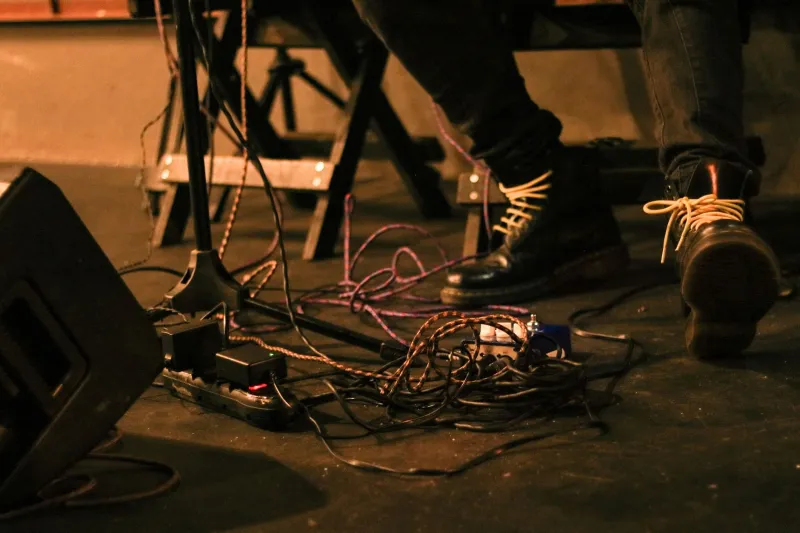
That is the trade. The gear that still works is rarely the gear that impresses anyone. It is the pedal with the missing battery cover, the tuner held together with gaffer tape, the DI box that has been in every van since the turn of the century. Younger players arrive with pedalboards like small aircraft cockpits. I arrive with a bag of adaptors and a look of mild surprise. We meet in the middle, which is usually where the good sounds are.
What gets better with time is not the gear. It is knowing which piece of gear not to fight. I no longer spend the first hour of a rehearsal trying to make a room sound like a studio. The room has its own opinion. A village hall wants you to play like a village hall. A converted warehouse wants nothing to do with subtlety. You can spend your whole life arguing with architecture, or you can turn the amp slightly and get on with it.
The things that quietly disappear
What I miss is not the stamina, although that has gone on a long holiday. It is the certainty that there will be another rehearsal. When you are young, the next session is assumed. There will be another Thursday, another van, another chance to try the song in a different key. When you are older, you become acutely aware that every rehearsal is a small event that had to be arranged around work, family, health, and the dog.
That awareness can make you cautious. It can also make you a better listener, if you let it. I have stopped filling every gap in the arrangement. There was a time when I thought a chord was a thing to be occupied, like a parking space. Now I am more interested in what happens if I leave it empty. Most young bands do not need another rhythm guitar. They need someone to notice that the second verse is doing all the work and the chorus is getting in its way.
What also disappears is the appetite for the wrong idea. Younger players have a glorious tolerance for failure. They will spend forty minutes on a strange bridge that goes nowhere, and they will come out of it with a new ending. I have learned to sit still during those forty minutes. It is not always easy. My instinct is to say, “We tried that in 1991 and it didn’t work.” But 1991 was a different room, a different band, and probably a different song. The wrong idea is often the only route to the right one.
Shut up and let them try it
The most useful sentence in my vocabulary is now: “Let’s hear it.” Not “let’s fix it,” not “let’s simplify it,” not “let’s do the thing I know works.” Just “let’s hear it.” It buys time, and time is the one thing a veteran can actually give away without losing anything.
I am not suggesting that experience has no value. It does. I can tell when a song is about to fall apart because the drummer is watching the singer instead of the bass player. I can spot a borrowed rig that will hum before the first chorus. I can read a setlist and know which song needs to go earlier because the room will be warmer by then. These are not mystical gifts. They are just scars with a useful shape.
But the older I get, the more I think the job is to be a steady pair of hands, not a loud pair of opinions. When the young guitarist plays the wrong chord with total conviction, I let it ring. Sometimes it turns out to be the right chord. Sometimes it turns out to be a door into something better. And sometimes it is simply wrong, and we fix it next week. That is allowed. Rehearsal is not a performance. It is a workshop with a kettle.
The case for staying in the room
There is a version of this essay that ends with graceful retirement and a nice line about passing the torch. I am not interested in that version. The case for staying in the room is not about legacy. It is about the room itself: the noise, the bad coffee, the argument about the intro, the moment when four people lock into something none of them could have written alone.
That moment does not care how old you are. It cares whether you are listening. The older I get, the more I find that listening is the whole job. The young players bring the appetite and the wrong ideas and the pedalboards that look like cockpit dashboards. I bring a working amp, a spare lead, and the ability to wait. It is not a glamorous role. It is, however, a useful one.
So I keep turning up. I keep making the tea. I keep saying “let’s hear it” when I want to say “we’ve done this before.” And every so often, in a draughty hall with a reluctant heater, the oldest person in the room learns something new. That is not legacy. That is just Thursday. And it is still the best night of the week.