The Price Is a Promise: Notes from a DIY Merch Table
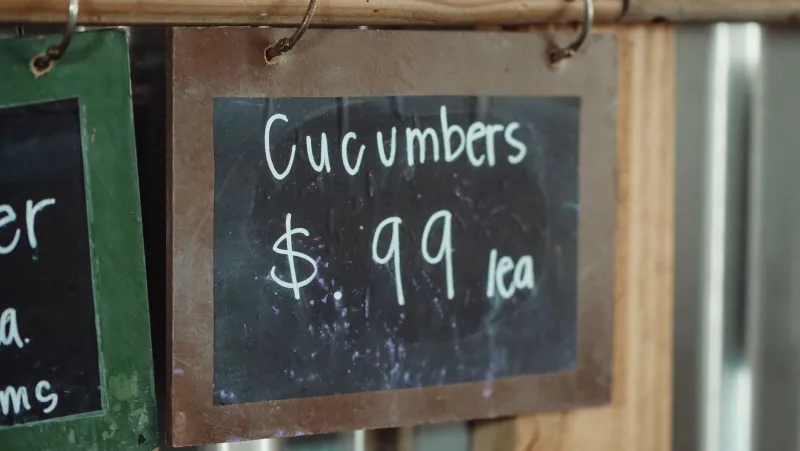
There is a particular kind of quiet at the back of a UK gig. The band is between songs, the room is half-lit, and someone is standing behind a table trying to look relaxed. On the table: a CD wallet, a tin of badges, a few T-shirts folded into neat rectangles, and a handwritten sign taped to the front. The sign might say Badges £2 / CDs £8 / Tees £15, or it might say Pay what you can — no pressure, or it might just say Thanks for coming. Either way, it is doing more work than it looks.
I have spent a lot of time at these tables, on both sides. As a punter, I have done the polite hover. As a seller, I have done the over-eager smile and the deliberately uninterested stare at the door. The merch table is where a DIY scene does its most honest arithmetic. Not just money in and money out, but value, nerve and belonging.
The Sign Is the First Conversation
A handwritten price sign is a fascinating document. It is not a menu, not a receipt, not a poster. It is a public statement of self-worth, softened by felt-tip. When a musician writes £8 next to a CD, they are saying: this object cost me something to make, and I think it is worth your money. When they write £5 or £3, they are saying something else — maybe about accessibility, maybe about the room, maybe about not wanting to be the person who prices a teenager out of a badge.
In 2026, the variation is wide. Some tables have neat printed cards and a card reader on a little stand. Others have a biscuit tin and a biro. Some have a QR code taped to a mug. The sign is still the first conversation, though. It sets the tone before either person speaks. A good sign is confident without being pushy. It answers the obvious questions — how much, what is it, do you take cash — and leaves the rest to the dance.
The Awkward Choreography
There is a choreography to buying merch at a small gig. The buyer approaches at an angle, as if they might just be passing. The seller looks up, then looks down, trying to offer availability without pressure. Someone says, 'No rush.' Someone else says, 'Just having a look.' The badge tin gets a gentle rattle. A CD is picked up, turned over, put down. Then a wallet comes out, or a phone, and the transaction happens quickly, almost apologetically.
It is awkward because both people are managing a small risk. The buyer is risking a few pounds on something they have not heard yet, or risking looking stingy if they do not buy. The seller is risking rejection of something personal. The table is a social interface, not just a point of sale. That is why the best sellers are not the most talkative ones. They are the ones who can read the room: a nod for the person who wants to browse, a quick answer for the person who knows what they want, a genuine 'thanks' for the person who buys nothing.
What the Fiver Drawer Holds
The cash drawer — usually a tin, sometimes a Tupperware, occasionally a purse — is a small piece of infrastructure. It holds the float, the change, the emergency fiver. It also holds a kind of trust. Nobody checks the float at a village hall gig. The drawer is a shared assumption that the night will roughly balance out, and that the person behind the table will not be left short.
The cashless shift has changed the choreography. More tables now have a card reader, and more buyers tap without thinking. That is convenient, but it is not neutral. A card reader needs signal, battery, a fee. A cash tin needs a float and a pocket. The ideal table in 2026 probably has both, plus a sign that says so. Cash still matters to people who budget in notes and coins, and to scenes that have long memories of being excluded by 'card only' signs. The table should not make belonging conditional on a banking app.
Badges and the Price of Belonging
Badge tins are the great levellers. A badge is cheap enough to be an impulse, small enough to carry home, and visible enough to start a conversation on a train. It is a low-risk way into a scene. A CD wallet is a slightly bigger commitment. A T-shirt is a statement. The table offers a ladder of belonging, and the prices on the sign tell you how steep that ladder is meant to be.
When a table prices its badges at £2 and its CDs at £8, it is not just covering costs. It is saying: there are several ways to support this, and none of them require you to be wealthy. That is a form of hospitality. It is also a form of self-respect. The artist is not pretending the work is free, and the buyer is not pretending the object is worthless. The price is a promise, and the promise is that both sides will act in good faith.
The Table as a Small Institution
The merch table is a small institution of independent culture. It is where the economics of a scene meet its manners. It is where a person who has just played to forty people in a working men's club learns whether their work travels beyond the stage. It is where a teenager buys their first badge and a regular buys their fourth T-shirt. It is where the night's atmosphere gets converted into something that can pay for the van.
So next time you are at a gig, look at the table before the band starts. Read the sign. Notice what is easy to buy and what is not. Notice who is behind it and who is hanging back. The table is not the main event, but it is part of the event. It is a promise about value, nerve and belonging — written in biro, taped to the front, waiting for someone to say yes.