Pinned and Pending: The Noticeboard as Local Music Infrastructure

Photo: Danny Gotfried, CC BY 4.0, via Wikimedia Commons
The board by the till
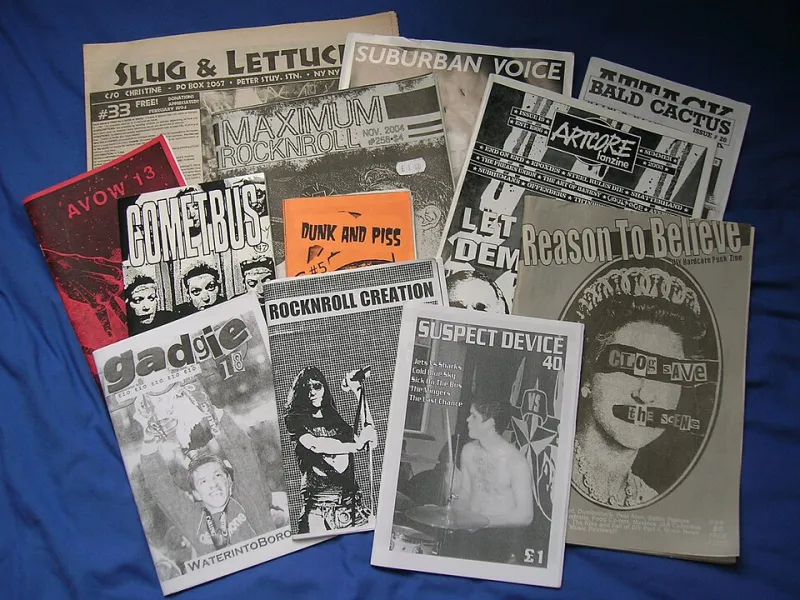
There is a noticeboard in a record shop in Leeds that I have come to think of as a local music office. It is behind the door, next to the till, and it is covered in layers. A gig poster for a noise duo in a church hall. A handwritten card for a fiddle workshop. A room for hire. A zine looking for contributors. A lost cat. A stack of tabs for a club night that may or may not still exist.
You will find versions of this board in cafés, libraries, community centres and the foyers of arts venues across the UK. They are not curated in any meaningful sense. They are not algorithmic. They are not even particularly well maintained. But they are infrastructure. They connect people who have a room with people who need a room, and people who have an audience with people who need an audience.
What gets pinned, what gets ignored
The first thing to say is that noticeboards are ruthless. A poster that is too big, too glossy or too vague will sit there unread. A poster that is too small will disappear into the layer below. The ones that work tend to have three things: a date, a place and a reason to care. They are often not the most designed. They are the most specific.
I have seen a hand-drawn A5 card pull a better crowd than a professionally printed A3. The card said: Friday, 8pm, the back room, three acts, bring a cushion. It was honest about the room. It was honest about the night. People trust that.
What gets ignored is just as instructive. The generic tour poster with no local connection. The event that is technically in the area but emotionally somewhere else. The listing that assumes you already know who the artist is. Noticeboards do not reward mystery. They reward clarity.
How a gig gets booked through a board
The practical network is simple, and it still works. You pin a poster. You leave a stack of cards. You come back a week later and pin again, because the board has moved on. You read the other notices. You find the person who runs the café and ask if they know anyone with a PA. You find the library notice that says the community room is free on Thursday evenings. You find the record shop that will put a poster in the window if you buy a record and ask nicely.
This is not a marketing strategy. It is a set of small, repeated actions. But it is how a lot of strange gigs happen: the poetry night in a bookshop, the ambient set in a church, the folk club in a function room, the cassette launch in a café that closes at nine. The board is where the room and the idea meet.
The board as archive
Look closely at a noticeboard and you can see time. The staples go back years. A corner of a 2019 poster peeks out from under a 2024 flyer. There is a card for a venue that closed, and another for a night that moved. The board is not trying to be an archive, but it is one. It records what a town thought was worth announcing.
That matters for local culture. The digital record is scattered across platforms that may not exist in five years. The noticeboard is physical, local and stubborn. It is not complete, but it is evidence. It tells you that a room was used, that a night happened, that someone bothered to print something and walk to the shop with it.
Why it still works in 2026
We are told that discovery is solved. It is not. The algorithm knows what you already like. The noticeboard knows what is happening on Thursday. Those are different questions.
In 2026, the board is also a useful corrective to the idea that independent culture is only online. It is slow. It is local. It is accountable. If you pin a poster and the gig is bad, you will see the person who runs the café again. That is a different kind of reputation.
A small practical manifesto
Pin early. Pin again. Read the board before you pin. Ask permission. Leave tabs. Put the date and the time at the top. Say what kind of night it is. Do not assume anyone knows who you are. And when you see a good notice, take a photo and tell someone.
The noticeboard is not a silver bullet. It will not fill a room on its own. But it is part of the network that keeps small rooms alive, and it costs almost nothing to use. The next time you are in a café, look behind the door. The town is still talking.