The 23:10 Test: What a Scene's Health Looks Like From the Bus Stop
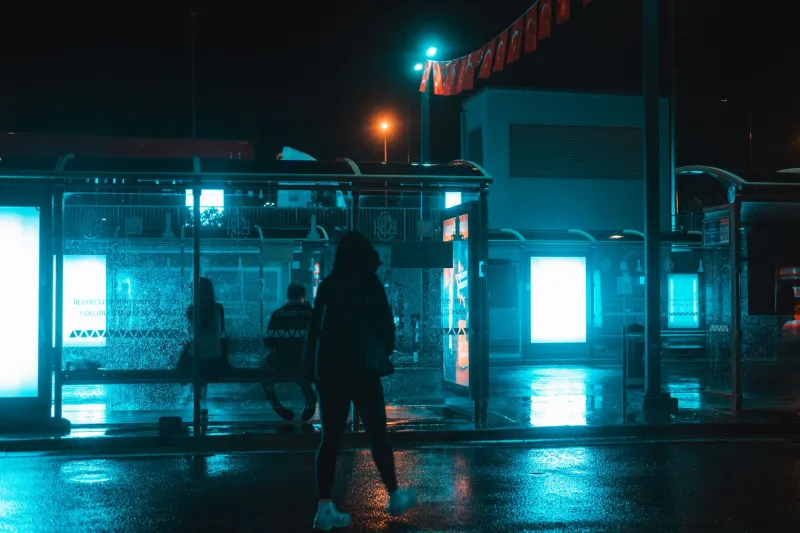
There's a particular sound at the end of a gig in a town without a night bus. It isn't the ringing in your ears. It's the soft chorus of people checking their phones and swearing.
The last service leaves at 23:10. The encore starts at 22:55. Between those two numbers sits an entire argument about who a scene is actually for, and nobody has printed it on the poster.
I've stood in enough wet car parks to know the routine. You watch the room from the back and you can almost see the split: the ones doing mental arithmetic on a taxi fare, the ones with a lift waiting, and the ones who have already accepted they're leaving before the band they paid to see. That last group is the one worth thinking about. They aren't casual fans. They're the ones who bought a ticket, bought a shirt, and then bought a bus ticket that couldn't wait.
The Cinderella Clause
Every town has one. It's the unspoken rule that the night ends when the timetable says so, not when the music does. In cities you can lean on a night bus or a late train, though even then the last one is earlier than you'd like. Out in the sticks, the bus that gets you to the gig is often the same bus that takes the support act home.
So people self-select. The ones with cars stay for the encore. The ones with spare cash split a cab. Everyone else leaves at the point where the set is good enough to hurt. A promoter once told me his real audience was 'whoever can still be in the room at half eleven', and he wasn't being cynical. He was being accurate.
That's the thing about a scene's reach. We measure it in ticket sales and capacity and how many people came from out of town. But the honest measure is further down the line: the furthest postcode from which somebody can reliably get home after the last note. Not the furthest postcode they'll travel from once, for a big night. The one they can do on a Tuesday.
Who the Timetable Keeps Out
It's easy to romanticise the scramble. The shared taxi, the walk in the rain, the sprint for the 23:10 with a guitar case banging your shin. There's a certain folklore to it, and I'm as guilty as anyone of enjoying the story afterwards.
But the story has a cast list, and it isn't a fair one. It's the seventeen-year-old who can't drive yet. The person who doesn't drink and doesn't fancy a taxi alone. The woman who has done the walk before and won't do it again. The disabled gig-goer for whom a two-mile trudge in the dark isn't a quirky anecdote but a genuine barrier. The parent who has to be up at six.
None of these people are absent because they don't care. They're absent because the infrastructure says no. That's not a scene problem in the romantic sense. It's an access problem, and access problems don't fix themselves with good intentions and a decent sound engineer.
The Shared Taxi Is a Venue
If you want the real aftershow, get in the back of a taxi with three strangers at midnight. It's where the actual reviews get written. You find out who nearly didn't come, who's learning the bass, who's got a demo on their phone and no idea what to do with it. I've had better conversations in a split-fare Vauxhall than in most green rooms.
But it's a privatised aftershow, and it's priced accordingly. Surge pricing is a cultural tax on the people who can least afford to pay it. When a fare home costs more than the ticket and the merch combined, the scene has quietly told a chunk of its audience to stay in.
The Designated Driver Deserves Better
The mate with the car is the most under-thanked person in independent music. They drink lime and soda, they park four streets away to avoid the clamping, and they wait in the cold while everyone else has the emotional climax of their week. They are infrastructure with a driving licence.
A free ticket is the minimum. A merch discount, a pint of something non-alcoholic, their name on the door list — it's small stuff, but it signals that the lift isn't invisible labour. Because it isn't. Without them, half the room wouldn't be there.
What Promoters Can Actually Do
None of this needs a task force. It needs a few habits.
Publish set times, and mean them. Finish by 22:15 where the last bus is 23:00, even if it costs you an encore. Put the bus times on the poster next to the door time — it's the most useful line on there. Talk to the local bus operator about a later Friday service; sometimes it only takes one email and a bit of persistence. Book a minibus from the nearest station for the bigger nights. Stick the local taxi numbers on the door, not just the venue's Instagram. Put a bike rack somewhere visible and a 'walking back to town, anyone?' board by the merch table.
And if you're a venue, look at your curfew and ask who it's protecting. Sometimes it's the neighbours, fair enough. Sometimes it's just habit.
The Long Walk Isn't a Substitute
I'll defend the rainy walk home as a memory. The debrief, the shared umbrella, the chips. It's part of the night's texture, and I wouldn't swap it.
But a scene that relies on the long walk is a scene that runs on a small pool of people who can afford to be tired, cold and lucky. That's not reach. That's a filter.
So the next time you're standing at the back watching a room empty out, listen for that chorus of phones and swearing. Then look at the poster. If the bus times aren't on it, that's your review of the night — and it's got nothing to do with the band.