Borrowed Ears: A Working Case for Taking the Support Slot
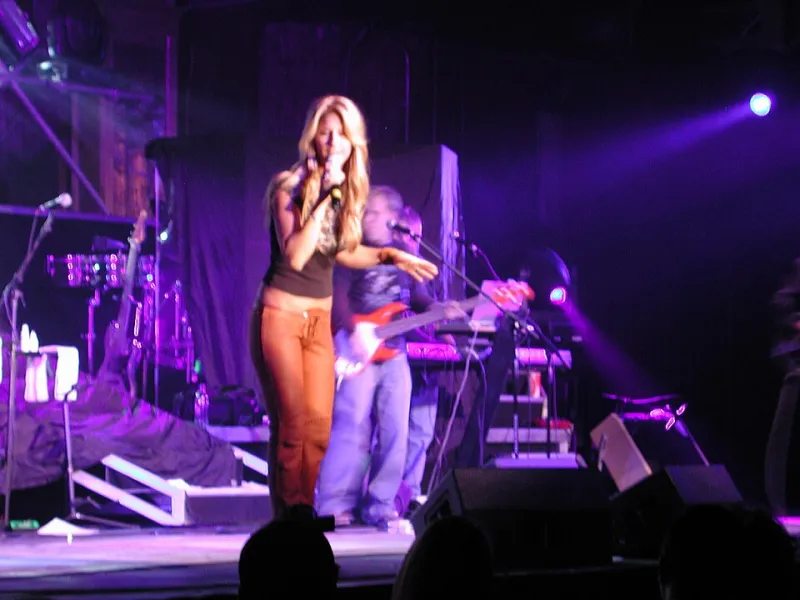
Photo: Cliff, CC BY 2.0, via Wikimedia Commons
It's twenty past seven. The room holds maybe a hundred and eighty if everyone stands close, the floor is still damp from the mop, and the headline act's bass cabinet is already parked stage left like a piece of furniture that owns the place. You've got thirty minutes. The sound engineer has met you once. Half the audience is still in the bar, and the other half is talking.
This is the support slot. I've come to think of it as the most honest work in the trade.
Thirty minutes is a full sentence
A headline set is a conversation. You can circle a point, double back, risk a slow one in the middle because you've earned the room's patience. A support set is a sentence, and it has to be a good one, delivered without a run-up.
The constraint is the gift. When you only have six or seven songs, every one of them has to justify its place, and you find out fast which ones don't. There's no room for the track that's really a mood, or the one that's only good at eleven at night in a room you already own. Cut it down to half an hour and the padding evaporates.
I've taken material out on support dates that I was precious about at home, and watched it either hold up in front of strangers or quietly fold. That's worth more than a month of rehearsing to a wall.
Nobody came for you, and that's the gift
Let's be clear about the arrangement: the room owes you nothing. They bought a ticket for somebody else. Some of them will give you the courtesy of listening, some will talk through the first two songs, and a few will decide, somewhere around the third, that actually they quite like this.
You cannot manufacture that. You can only earn it, and the earning is a completely different skill from playing to people who already know the words. It forces clarity. It kills the in-joke. It makes you ask, honestly, whether the thing you're doing reads from twelve feet away to someone with no context and a pint in their hand.
That question is useful whether you're on stage, publishing a piece of writing, or putting a project into the world. If it only works for people who already love you, it isn't finished.
The room is a collaborator, not a backdrop
Every venue has a personality and most of them don't suit you. The low ceiling that eats the top end. The corner stage where half the audience can only see your shoulder. The PA that was decent in 2014.
Support slots teach you to write and play for the room you're actually in rather than the one you imagined. Play quieter than feels natural in a small space and people lean in. Play slower in a room that's still filling up. Don't fight a chatty back bar with volume — you'll lose, and you'll sound worse losing.
I've learned more about dynamics from bad rooms than from good ones. A good room flatters everybody. A bad room tells you the truth about your arrangements.
Humility, practised until it's technical
There's a version of humility that is mostly performance — the aw-shucks patter, the thanking of the promoter. Fine, but it isn't the useful kind. The useful kind is practical: knowing where your gear goes, knowing the changeover time and sticking to it, knowing that the headline act's engineer has done three of these today and doesn't need your opinion on the monitor mix.
Being easy to work with is a skill, and it is learned, not innate. Get offstage on time. Coil your own cables. Ask before you move anybody's amp. Say thank you to the person on the door by name if you can manage it. None of this is glamorous and all of it is remembered. The UK's small-venue circuit runs on favours and goodwill, and it is smaller than you think.
The merch table is part of the set
Here's the unromantic bit. The support slot is also a market stall. You've got twenty minutes after your set while the room is still warm, and that's when the ten people who liked you might buy something.
Talk to them. Not a sales pitch — just talk. Ask what they came for. Find out what they thought. Some of the best feedback I've had about my work came from someone who'd never heard of me an hour earlier and had no reason to be kind. That's a focus group you can't buy, and it costs you a table and an hour of standing up.
A working manifesto, of sorts
- Play shorter than you're allowed to. Leave them wanting a bit more, not checking the time.
- Front-load nothing, but earn the third song. That's where strangers decide.
- Say your name twice. Once at the start, once near the end. Not more.
- Watch the headline act from the side of the stage. Every night. It's free education and it's good manners.
- Don't apologise for the room, the set length or the songs. Nobody asked.
- Stay for the whole night. Leaving after your set tells the room exactly how much you think of it.
- Send the promoter a note the next day. Two lines is enough.
The morning after
The thing about support slots is that they don't feel like progress at the time. There's no headline, no encore, and the fee barely covers the fuel. You drive home at midnight with a bag of unsold CDs and somebody else's set ringing in your ears.
But the work accumulates. A shorter set sharpens the long one. A borrowed audience teaches you how to introduce yourself. An unfamiliar room shows you which parts of your craft are actually yours and which were only ever carried by familiarity.
You don't get better by being the reason people came. You get better by being the reason a few of them stayed.